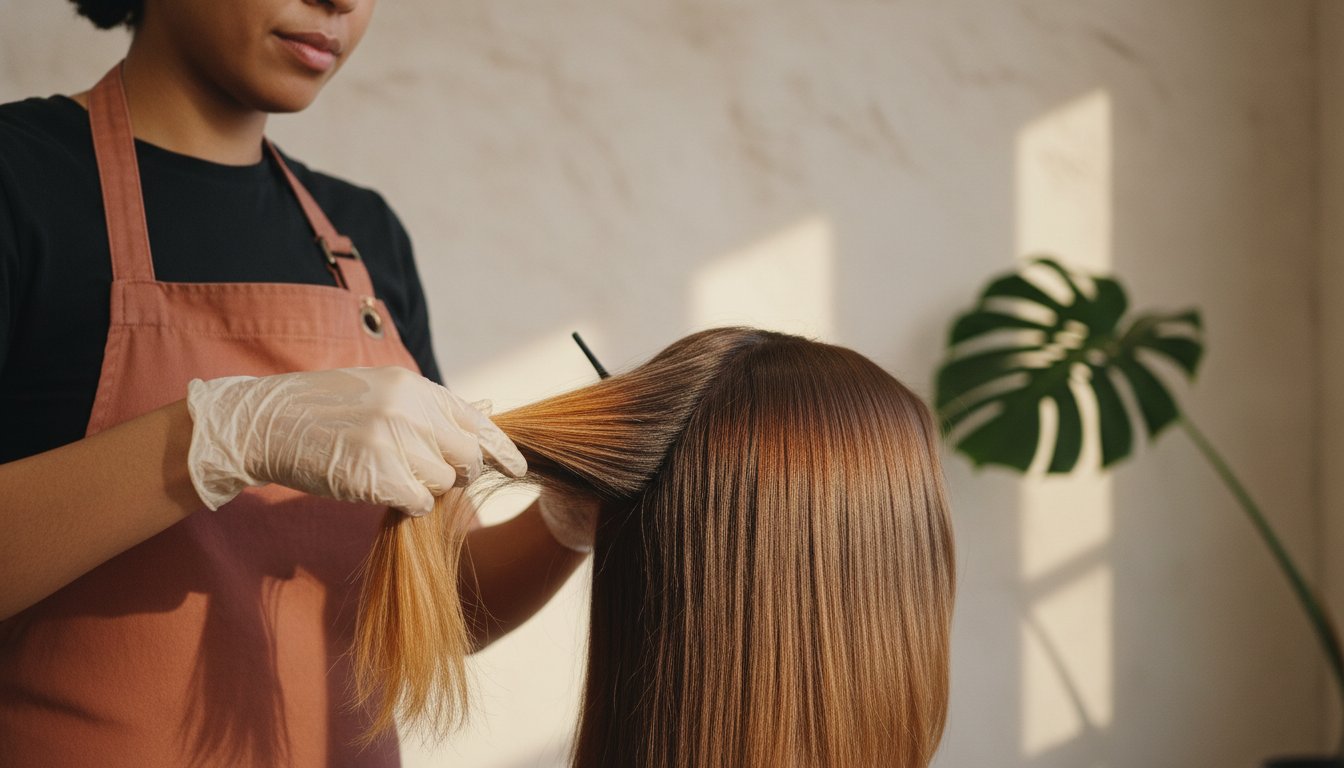
Color correction isn't a standard beauty treatment; it's a high-stakes chemical salvage operation where one wrong move leads to permanent breakage. If you're currently hiding under a hat or panicking about a DIY disaster, you aren't alone. Booking a verified hair color correction specialist is the only way to transition from a brassy, uneven mess back to a tone you actually recognize. It's about more than just aesthetics. It's about saving the integrity of your hair before the damage becomes irreversible.
We know the anxiety that comes with a botched color. You're likely worried about mounting costs or the fear that your hair will simply snap off. It's frustrating to feel like you've wasted money on a look that makes you want to stay indoors. This guide debunks five common myths about the service in 2026 to give you total clarity. You'll learn how to identify a professional who uses modern bond-building tools and what to expect regarding hourly rates and timelines. We'll show you how to find a reliable expert in the US, UK, or Canada to restore your confidence and your hair's health.
Key Takeaways
- Understand that color correction is a chemical salvage mission focused on neutralizing pigments while preserving hair integrity.
- Recognize why complex corrections often require multiple sessions to prevent irreversible breakage and over-processing.
- Learn how to verify a qualified hair color correction specialist by reviewing specialized portfolios and insisting on a thorough consultation.
- Prepare a complete chemical history of your hair from the last 24 months to ensure a safe and predictable outcome during your appointment.
- Use the Allstylist directory to efficiently find and book verified color experts across the US, UK, and Canada.
What a Hair Color Correction Specialist Actually Does (and Doesn't)
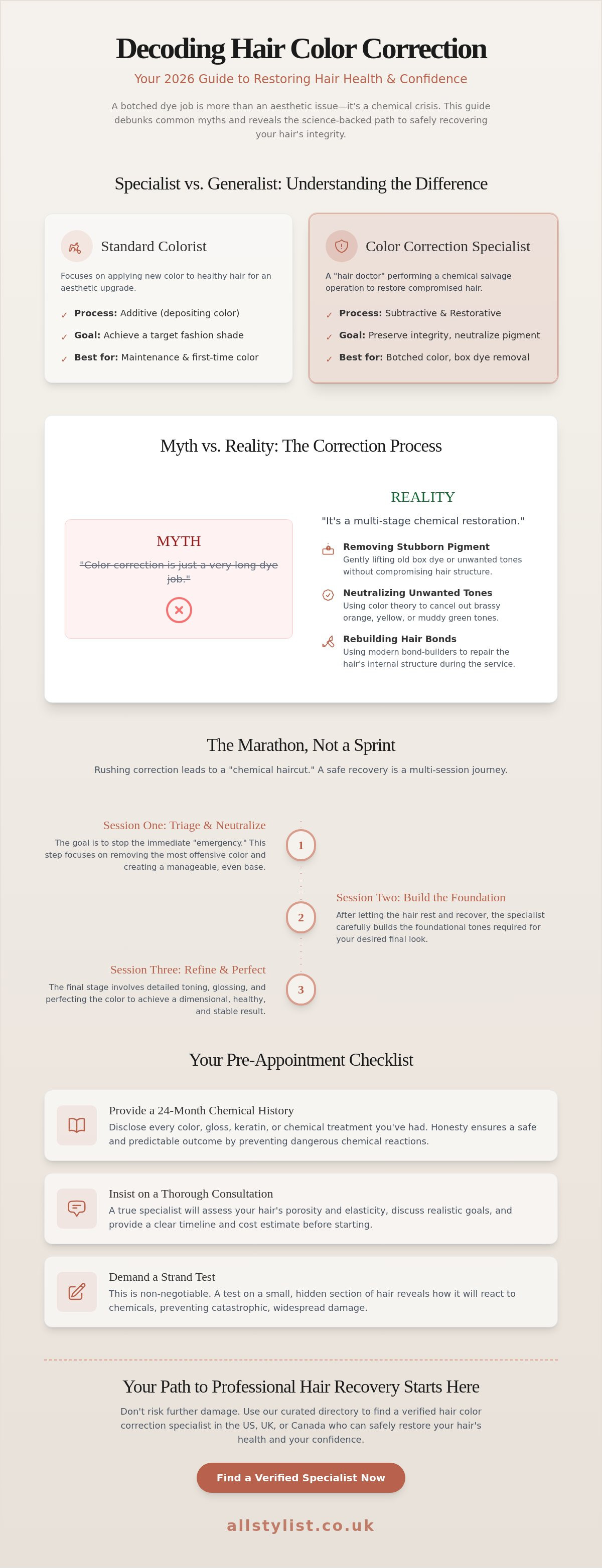
Color correction is often misunderstood as a simple aesthetic upgrade. In reality, it's a sophisticated chemical salvage operation designed to fix hair that has been compromised by previous treatments. While a standard colorist focuses on applying new pigment to healthy hair, a hair color correction specialist manages the complex task of removing or neutralizing unwanted tones while preserving the hair's physical structure. Think of them as a hair doctor. They diagnose chemical damage. They don't just "paint" the hair; they prescribe a specific path to recovery based on your hair's unique history.
The goal of this service is rarely a quick fashion change. Instead, it's about restoration. A specialist prioritizes hair health over the final shade. If your hair is too damaged to hold color, they'll tell you. They focus on bringing your hair back to a stable, natural-looking state where it can eventually support regular maintenance again. This process requires patience and a high level of technical precision that goes far beyond what you'll find in a standard salon visit.
The Science of Correction: Porosity and Pigment
A successful correction begins with a deep dive into hair anatomy. Specialists must assess porosity. This is how well your hair's cuticle layer can absorb and retain moisture or chemicals. Over-processed hair often has high porosity. This means it absorbs color too fast and loses it just as quickly, leading to patchy results. A specialist identifies these zones before any product touches your head.
Specialists also work with the underlying pigments that emerge during chemical processes. When you lighten hair, you expose raw red, orange, or yellow tones. Understanding the fundamentals of hair coloring is essential here; the specialist uses the pH scale to open or close the cuticle strategically. This scientific approach ensures they don't push the hair past its breaking point while neutralizing those unwanted "warm" ghosts of previous dye jobs.
Myth #1: Color Correction is Just a Long Dye Job
Many clients assume correction is just a standard appointment that takes a bit longer. This is a dangerous misconception. Standard coloring is additive. You're putting pigment into the hair. Correction is often subtractive or restorative. It involves:
- Removing stubborn box dye pigments without melting the hair.
- Neutralizing "hot" roots or muddy ends from previous errors.
- Rebuilding broken bonds within the hair shaft using modern bond-builders.
Because every hair history is unique, specialists rarely offer fixed-price menus for these services. They prioritize structural integrity over the immediate aesthetic result. If a specific look risks total hair failure, a hair color correction specialist will pivot the plan. This level of expertise is what separates a generalist from a true correction expert. Finding these vetted professionals in the US, UK, and Canada is now easier through digital directories that focus on verifying niche skills and professional backgrounds.
Debunking the 'One-Session Miracle': Why Timing Matters
Don't expect a miracle in four hours. One of the most dangerous myths in the industry is that any hair disaster can be fixed in a single afternoon. A qualified hair color correction specialist knows that rushing the process is the fastest way to a "chemical haircut." When hair is over-processed in a single sitting, the structural integrity collapses. This leads to snapping, gummy textures, and permanent loss. Success requires a strategic approach that prioritizes health over immediate gratification. If your hair is already compromised, pushing it further without a break is reckless.
Specialists rely on "toning and resting" phases. These intervals allow the hair's pH level to stabilize between aggressive lifting sessions. To ensure safety, a specialist will always perform a test strand. This involves applying product to a small, hidden section of hair to observe how it reacts. It's a scientific precaution that prevents total hair failure. Understanding the chemistry of hair dye helps explain why these pauses are non-negotiable; you're dealing with complex molecular changes that cannot be forced. Each session is a calculated step toward stability.
The Multi-Session Roadmap
Your journey to the perfect tone is a marathon, not a sprint. A standard roadmap often looks like this:
- Session One: The goal is neutralizing "emergency" tones. This stops the immediate embarrassment of neon or muddy colors.
- Session Two: This phase focuses on rebuilding the hair's protein structure. Specialists use deep-penetrating treatments to prepare the hair for further lightening.
- Session Three and Beyond: Only once the hair is stable does the specialist aim for the final "goal color."
Myth #3: I Can Fix the Brassiness at Home with Toner
The "toner trap" is a common mistake for those trying to save money. Retail toners often contain inconsistent pigment loads or metallic salts. When you layer these over professional-grade chemical errors, you "stain" the cuticle. This creates a barrier that makes it harder for a hair color correction specialist to lift the hair evenly later. It often results in a more expensive and difficult correction process. A specialist needs a clean canvas to work effectively. Using DIY fixes typically compounds the problem by adding unknown variables to the mix. If you've had a recent mishap, book a professional consultation through our directory before applying any more store-bought products. It's the safest way to ensure your hair survives the restoration process and returns to a natural-looking state.
Specialist vs. Generalist: How to Identify True Expertise
Distinguishing between a standard stylist and a true hair color correction specialist is critical for your hair's survival. While a generalist might create beautiful results on healthy, virgin hair, they often lack the technical training required to navigate complex chemical overlaps. A specialist treats hair as a biological puzzle. They don't just look at the color you want; they analyze the chemical layers currently living inside your hair shaft. The first sign of a professional is their refusal to book a corrective service without a physical consultation. They must feel the hair's elasticity and observe how it stretches when wet to determine if it can withstand further processing.
True experts invest heavily in specific bond-building technologies. In 2026, look for specialists who utilize advanced systems like Olaplex or K18. These aren't just "conditioning treatments"; they are chemical tools that rebuild disulfide bonds during the lifting process. If a stylist plans to perform a heavy correction without these safeguards, your hair integrity is at risk. When vetting a professional, look past general praise for "nice haircuts" in their reviews. Search specifically for mentions of corrective success. Reliable feedback will focus on how the stylist saved the client's hair from a disaster or successfully transitioned them from a botched DIY job to a natural, even tone.
Red Flags When Booking a 'Correction'
Identifying an amateur early can save you from a "chemical haircut." Watch for these warning signs during your initial inquiry:
- Firm quotes over the phone: No specialist can give an accurate price without seeing the hair's current state and porosity.
- Ignoring your history: If they don't ask about every box dye, gloss, or bleach application from the last 24 months, they aren't prepared for the chemical reactions that may occur.
- Impossible promises: Be wary of any stylist promising to take you from "box black" to "platinum blonde" in a single afternoon. This is a recipe for total breakage.
The Specialist’s Portfolio: What to Look For
A specialist's portfolio should be a gallery of technical triumphs. Don't just look at the "after" photo; analyze the transition. Look for perfect evenness in the results. There should be no "banding" or horizontal stripes where the old color met the new. Root-to-tip consistency is the mark of a master. Additionally, check for the physical quality of the hair in the photos. Does it have a healthy shine and natural movement? If the corrected hair looks stiff or dull, the integrity was likely sacrificed for the color. Finally, ensure they have experience with your specific hair type. A hair color correction specialist who excels with fine, straight hair may not have the same expertise with high-porosity textured or thinning hair. Use digital directories to filter for these niche skills across the US, UK, and Canada to ensure you're booking a verified expert who understands your unique needs.
Preparing for Your Corrective Appointment: A Client’s Checklist
A successful correction depends as much on your preparation as it does on the stylist's skill. You aren't just booking a standard appointment. You're entering a technical partnership with a hair color correction specialist to save your hair. To get the best results, you must be transparent. Hidden chemical layers react unpredictably when new formulas are applied. Start your preparation at least two weeks before your visit by stopping all at-home "remedies." Dish soap, lemon juice, and baking soda might seem harmless, but they strip the hair of essential moisture and complicate the specialist's job.
Clear your schedule for the day. Corrective work is meticulous. It often involves multiple steps of lifting, neutralizing, and treating. Rushing a specialist leads to mistakes. Bring inspiration photos to show your desired direction, but stay open to realistic alternatives. Your specialist will prioritize the health of your hair over a specific shade of blonde. If your hair's integrity is at risk, they will suggest a safer, darker, or more neutral path that preserves your length and texture. This collaborative approach ensures you leave the chair with hair that looks good and feels healthy.
The 'Chemical Diary': What Your Stylist Needs to Know
Your hair's history is its chemical roadmap. A hair color correction specialist needs to know every treatment from the last 24 months. Hair grows roughly half an inch per month; if your hair is shoulder-length, those ends have seen two years of history. Even if a color has "faded," the chemical alterations remain inside the hair shaft. Be ready to disclose:
- Every instance of box dye, henna, or professional color applied.
- Thermal straightening treatments, perms, or keratin services, even if done months ago.
- Your current shampoo, conditioner, and styling routine.
- Exposure to chlorine, hard water, or consistent high-heat styling.
Budgeting for Correction
Expect a different pricing structure than a standard highlight service. Most specialists bill hourly for corrective work. This covers the intense labor, the high volume of product used, and the constant monitoring required during the process. You're paying for the "insurance" of their expertise and the security of knowing your hair is in safe hands. Additionally, factor in the cost of mandatory take-home bond-building treatments. These aren't optional add-ons. They are essential tools to maintain the work done in the chair and ensure long-term hair health. To secure your spot with a vetted expert, find and book a specialist who matches your hair needs today. Investing in a professional now prevents the far higher cost of repairing total hair failure later.
Finding a qualified hair color correction specialist shouldn't feel like a gamble. Most general directories bury specialists under a mountain of generic salon listings. Allstylist changes this by acting as a dedicated hub for niche hair professionals across the UK, US, and Canada. Our platform reduces the friction of finding an expert who understands the specific chemical challenges of restorative work. You can filter results by specific tags. This ensures you only see stylists with the technical background needed for your unique situation.
Visual proof is essential in corrective work. Allstylist provides a central location to view verified portfolios and real client reviews. You don't have to jump between social media apps and search engines to verify a stylist's skill. You can see their "before and after" transitions directly on their profile. This transparency builds trust. It ensures you book with someone whose aesthetic and technical approach aligns with your goals. We streamline the connection between independent stylists and clients, making high-end expertise accessible and reliable.
Vetting Your Next Stylist on Allstylist
Direct communication is a core feature of our platform. You can message stylists before committing to a full appointment. Use this feature to discuss your hair's history and ask about their specific certifications in color chemistry. If you prefer a more private setting, you can even find mobile specialists through our directory. These professionals can visit your home for an initial consultation. This provides a low-stress environment to assess your hair's health and plan the recovery journey without the pressure of a busy salon floor.
Taking the First Step to Recovery
Stop the cycle of damage today. The longer you wait to address a botched color, the more difficult the correction becomes. Allstylist removes the guesswork by handling the logistical heavy lifting for you. We provide a curated selection of experts who prioritize hair integrity above all else. Finding "the one" in a sea of generalists is now a simple, digital process. Start your hair's recovery journey with confidence and professional support. Find your hair color correction specialist on Allstylist today and restore your hair to its natural, healthy state.
Your Path to Professional Hair Recovery
Restoring your hair from a chemical mishap requires a technical expert who understands the science of the hair shaft. You've learned that true correction is a marathon, not a sprint. It demands total honesty about your hair history and a willingness to prioritize health over an immediate color change. By choosing a verified hair color correction specialist, you protect your hair's integrity while achieving a natural, even tone that lasts. Success in 2026 is about finding a professional who uses advanced bond-builders and provides a clear, realistic maintenance plan.
Allstylist simplifies this process by connecting you with independent experts across the UK, US, and Canada. You can browse verified stylist portfolios and read specific reviews for corrective work in one central location. Direct booking with vetted professionals reduces the stress of fixing a botched look. Don't let a bad color experience define your style. Find and book a verified hair color correction specialist near you today. Take the first step toward a safe, professional transformation and get back to the hair you love.
Frequently Asked Questions
Why is hair color correction so expensive compared to regular coloring?
Correction is more expensive because it requires a higher volume of premium products and significantly more labor intensive hours. Unlike a standard application, specialists must monitor chemical reactions every few minutes. They use advanced bond builders and multiple rounds of pigment removal or neutralization. You're paying for specialized expertise and the security of knowing your hair won't be destroyed during the process.
Can a hair color correction specialist fix hair that is already breaking?
A specialist can stop further breakage, but they cannot reglue hair that has already snapped. Their priority is to stabilize the remaining hair using protein rich treatments and bond builders. In severe cases, the only solution is to stop all chemical services and focus on a long term health plan. A hair color correction specialist will always prioritize integrity over aesthetics to prevent a total chemical haircut.
How long does a typical color correction appointment take?
Most corrective appointments last between four and eight hours, though complex cases may require multiple full day sessions. The timeline depends on the hair's porosity and the number of chemical layers present. Rushing this process leads to uneven results or damage. Your stylist will provide a more accurate time estimate after a physical consultation and a successful test strand.
Will color correction turn my hair orange or brassy?
Temporary brassiness is often a necessary middle step when lifting dark pigments out of the hair. Raw underlying pigments like red and orange naturally emerge during the lightening process. A specialist uses professional grade toners to neutralize these shades. However, if your hair is severely compromised, they may need to leave it at a warmer stage temporarily to preserve health before the next session.
Is it possible to go from box-dye black to blonde in one session?
No, achieving a healthy blonde from box dye black usually requires three or more separate sessions. Box dyes contain metallic salts and heavy pigments that are difficult to remove. Attempting this in one day almost always results in extreme breakage. A patient, multi step approach ensures you reach your goal color without sacrificing the length or texture of your hair.
What should I do if a salon ruined my hair color?
Stop all chemical treatments immediately and book a consultation with a verified specialist for a professional assessment. Avoid using at home fixes or going to another generalist salon for a quick remedy. A specialist needs to see the hair in its current state to determine the best path forward. Document the damage and be ready to provide a full chemical history.
How often do I need to maintain corrected hair?
Expect to visit your stylist every four to six weeks for toning and deep conditioning treatments to maintain the new color. Corrected hair is often more porous, meaning it loses pigment faster than healthy hair. Regular maintenance prevents the return of unwanted brassy tones. Using professional grade, sulfate free products at home is also essential for extending the life of the correction.
Does Allstylist verify the credentials of the colorists on the platform?
Allstylist provides a transparent platform where you can review a hair color correction specialist through their verified portfolios, professional history, and client feedback. We act as a bridge between high end service seekers and independent experts in the US, UK, and Canada. While we facilitate the connection, we encourage clients to use our messaging tools to ask about specific certifications and training before booking.